
adventures
Walking Your Dog in Summer in SEQ
South East Queensland summers are stunning but seriously hot. Here's how to keep your dog safe, comfortable, and happy on summer walks across Brisbane, the Gold Coast, and Sunshine Coast.
Updated 3 April 2026
Walking Your Dog in Summer in SEQ
South East Queensland summers are no joke. From November through March, temperatures regularly climb above 30°C, humidity soars, and the pavement bakes in the sun long after the clouds roll in. For dogs, this combination can be genuinely dangerous but with a few simple habits, you can still enjoy beautiful summer walks together.
The Golden Rule: Timing Is Everything
The single most important thing you can do in summer is walk early or walk late. Aim for:
- Before 8am the coolest part of the day, especially on the Sunshine Coast and hinterland where mornings can be genuinely fresh
- After 5pm once the sun drops low, the air cools quickly and pavement starts to release heat
- Avoid 10am–4pm this is the danger zone, even on overcast days
On days above 35°C, consider skipping the walk entirely and doing enrichment at home instead sniff mats, frozen treats, hide and seek. A mentally tired dog is a happy dog.
The Pavement Test
If you can't hold the back of your hand on the pavement for 5 seconds, it's too hot for your dog's paws.
Dark asphalt can reach 60–70°C on a sunny 35°C day hot enough to cause serious burns within minutes. Grass verges, dirt paths, and shaded bush trails are much safer. This is one reason dog-friendly parks and off-leash areas in SEQ are so valuable in summer.
Tip: Dogs who are new to summer heat or have pink/light-coloured pads are more sensitive. Start slow and check their paws after walks.
Signs of Heat Stress in Dogs
Know what to watch for:
- Excessive panting more than usual, even at rest
- Drooling heavily thick, ropey saliva
- Red or pale gums
- Wobbly or uncoordinated movement
- Vomiting or collapsing
If your dog shows any of these signs, move them to shade immediately, offer water, apply cool (not cold) water to their paws, belly and groin, and call your vet. Heatstroke can be fatal within minutes.
Flat-faced breeds (French Bulldogs, Pugs, Bulldogs, Boxers) are at much higher risk because they can't pant efficiently. These breeds should stay inside during any temperature above 28°C.
Hydration on the Trail
Bring more water than you think you need for both of you.
- A collapsible bowl takes up almost no space in your bag
- Offer water every 15–20 minutes on hot days, not just when your dog seems thirsty
- Some trails in SEQ have dog water stations check before you go
- Frozen treats (frozen bone broth, frozen banana) can help dogs cool down after a walk
Best Types of Trails for Summer
Not all trails are equal in summer heat. Look for:
Shaded forest trails heavy canopy cover keeps temperatures noticeably lower.
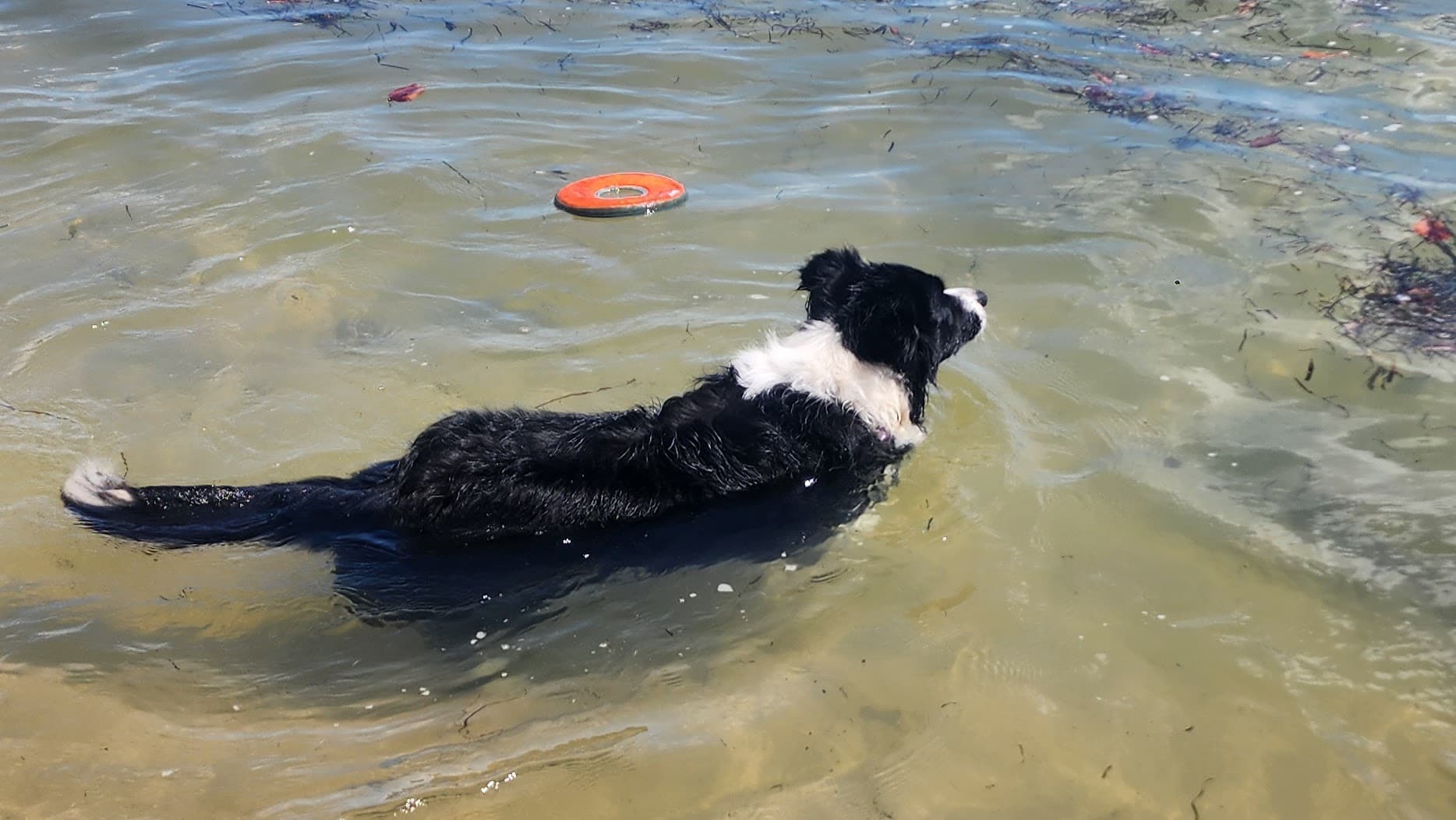
Beach and waterway access dogs who can jump in the water can regulate their temperature much better. Bribie Island, Noosa's dog beaches, and the Tweed Coast are popular summer spots.
Early morning parks flat, grassy off-leash parks with shade trees are ideal for a quick early run before the heat kicks in.
Avoid exposed ridgelines and open fields in the middle of the day no shade, reflected heat from the ground, and often no water access.
Sun Protection for Dogs
Yes, dogs can get sunburnt especially short-coated dogs and those with pink skin on their nose, ears, and belly.
- Apply pet-safe sunscreen (or plain zinc-free, fragrance-free human sunscreen) to ears, nose, and belly before long sun exposure
- Avoid shaving double-coated breeds in summer their coat actually insulates against heat as well as cold
- A light UV-protective dog shirt can help for very sun-sensitive dogs
Summer Walk Checklist
Before you head out:
- [ ] Check the time before 8am or after 5pm?
- [ ] Do the 5-second pavement test
- [ ] Pack water + collapsible bowl
- [ ] Know the nearest shaded rest stop on your route
- [ ] Check your dog's paws after (and during) the walk
- [ ] Watch for panting, drooling, or lagging behind
SEQ-Specific Tips
Brisbane: The river corridors (Enoggera Creek, Kedron Brook, South Bank) are shaded and often cooler than suburban streets. Early mornings at New Farm Park or Kangaroo Point are popular for good reason.
Gold Coast: Beach access is the big advantage here Tallebudgera Creek and Currumbin Creek are dog-friendly swimming spots that are absolute summer gold.
Sunshine Coast: Noosa National Park trails are best in winter (they're hot in summer), but the Maroochy River foreshore and Alexandra Headland dog beach are great early morning options year-round.
Hinterland: Elevations in the Scenic Rim and Glass House Mountains can be 5–8°C cooler than the coast on hot days worth the drive if you want a proper summer hike.
Stay cool, walk smart, and your dog will thank you for it. Adventures are simply better with a dog just make sure they're safe ones.